mlexo
Searching for variability in ASAS-SN light curves

Characterizing exoplanet atmospheres
Hydrothermal synthesis and testing of metal oxide nanostructures
mlexo
mlexoSearching for variability in ASAS-SN light curves
malcaAs an ASAS-SN Data Analyst at the Ohio State University Department of Astronomy, I lead a search for slowly varying stars and dimming events caused by dust structures. ASAS-SN (All-Sky Automated Survey for Supernovae) is a network of telescopes that continuously monitors the entire sky, measuring how bright millions of stars appear over time. These measurements create what astronomers call "light curves" - graphs showing how a star's brightness changes over days, months, and years.
Some stars show dramatic, long-lasting dips in brightness that can last for months or years. These "big dippers" are often caused by clouds of dust orbiting around the star, which periodically block our view. By systematically searching through millions of ASAS-SN light curves, we can identify these unusual stars and study the physical processes that create the dust structures around them.
To support this research, I developed MALCA (Multi-timescale ASAS-SN Light Curve Analysis), a software package designed to search for "big dipper" extrinsic variables, microlensing events, and long-term variability in ASAS-SN light curves. The pipeline architecture performs pre-filtering—including sparse light curve removal, multi-camera requirements, and VSX crossmatching—before running event detection to fit dip models and compute Bayes factors. The package also includes modules to score microlensing events (Paczyński curves) and perform injection-recovery testing to validate pipeline completeness and contamination. This work is being conducted in collaboration with Prof. Christopher Kochanek and Prof. Krzysztof Stanek at Ohio State. The codebase is available on GitHub.
Characterizing exoplanet atmospheres
atmo-retrievalHigh-level overview:
Ultra hot Jupiters are an exceptional class of exoplanets. They rapidly orbit their host stars in close proximity and have puffy atmospheres that reach more than 2,200 Kelvin. They are expected to be tidally locked, meaning one hemisphere permanently faces the star, causing a large temperature gradient across the planet. With high-quality observations, we can study the extreme physical processes governing these atmospheres. We observed one such exoplanet, KELT-20b, with the Potsdam Echelle Polarimetric and Spectroscopic Instrument (PEPSI) on the Large Binocular Telescope (LBT) located in Mt. Graham, Arizona.
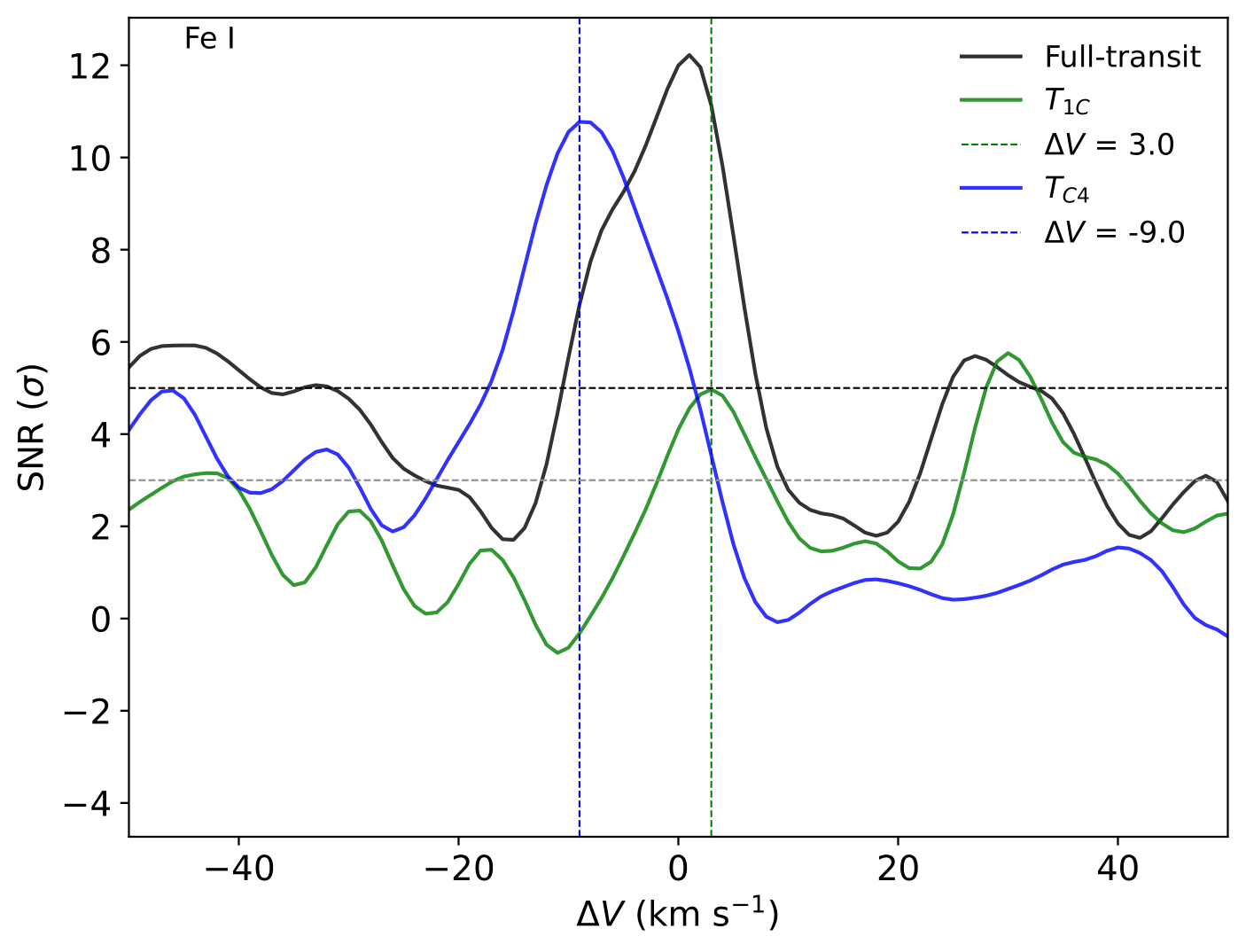
To examine the atmosphere, we collect the light from the host star that passes through the exoplanet's atmosphere during a transit, some of which is absorbed by constituent elements in the atmosphere. Due to the quantum nature of electrons, each atom and molecule only absorbs photons at characteristic wavelengths, which allows us to identify the atmospheric constituents by examining the wavelengths where light is absorbed. Typically, exoplanet researchers take many exposures over the course of a transit, then combine their data to create a transmission spectrum that shows how much light is absorbed at each wavelength. Instead of measuring the transmission spectrum exclusively, it is often advantageous to calculate the similarity between the observed spectrum and a computer-generated spectrum with the cross-correlation method.
By analyzing these absorption features in detail, we can not only pinpoint the chemical makeup of the exoplanet's atmosphere but also probe the underlying physical processes. We can infer temperature gradients, wind speeds, and circulation patterns. These inferences are strengthened through comparison to theoretical models.
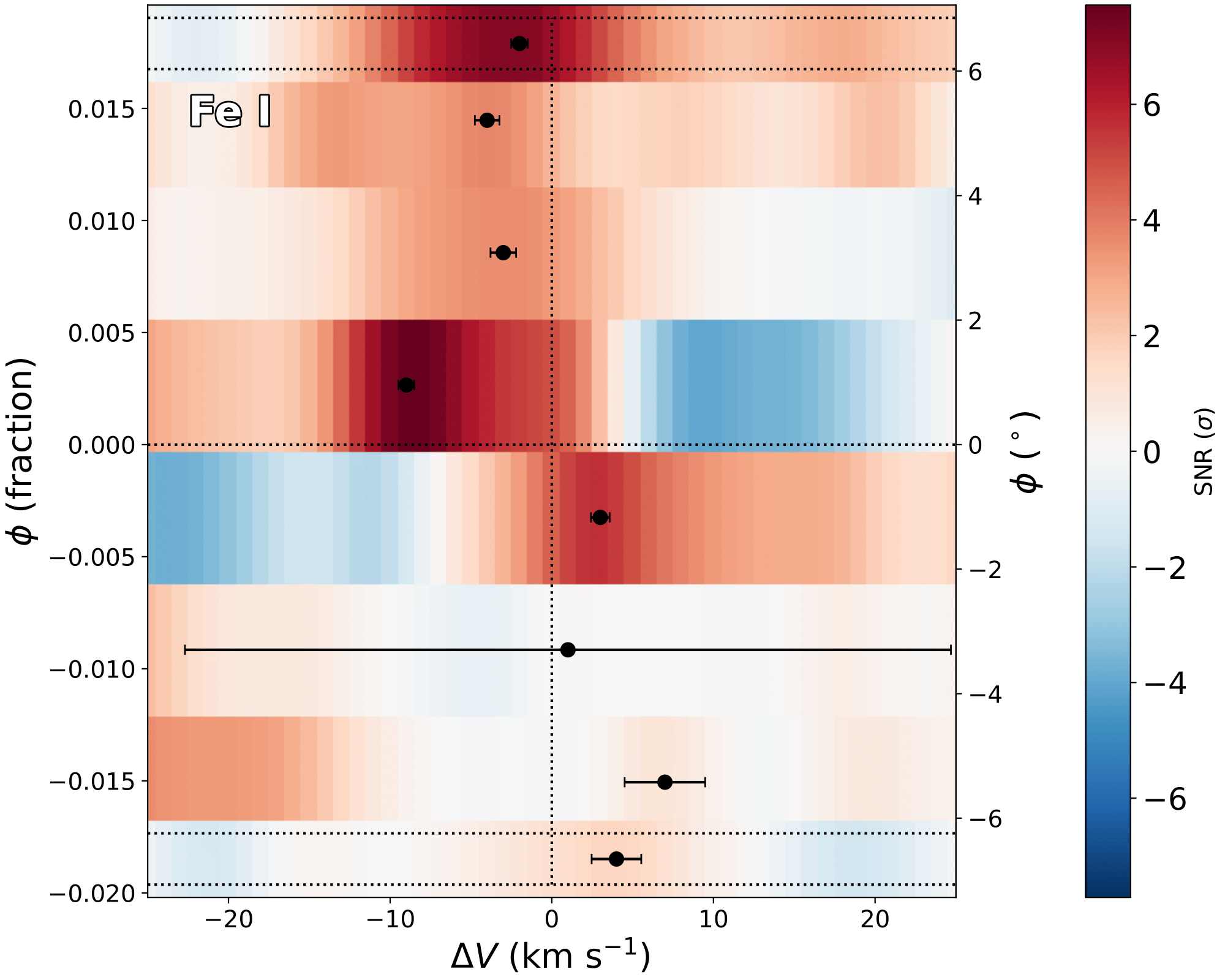
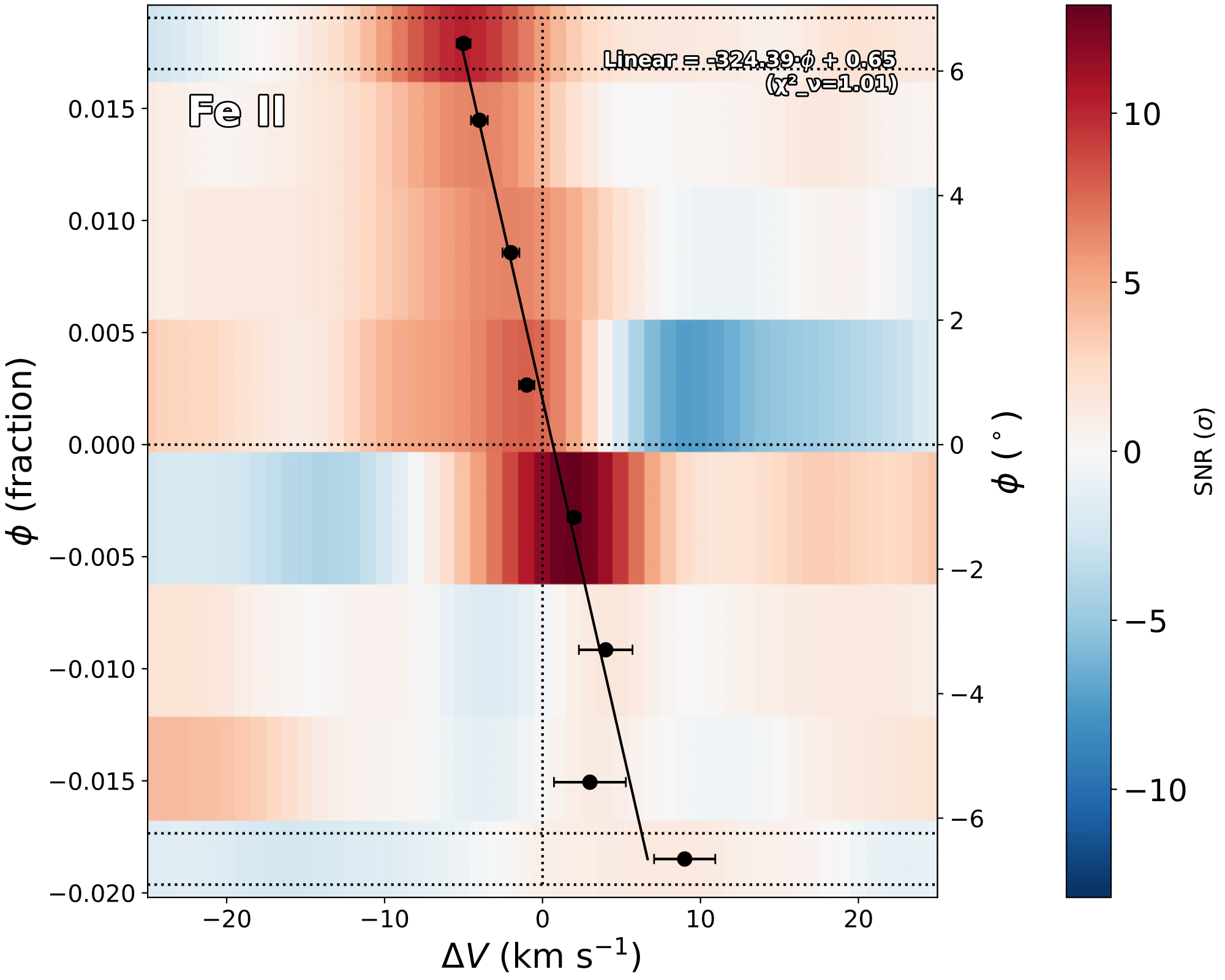
As the hot Jupiter transits, light from the star passes through different slices of the atmosphere, meaning that our transmission spectrum should evolve over time. As mentioned, observers commonly combine all exposures during transit together to maximize signal strength. Our research is unique in that we do not combine all exposures into an averaged spectrum, but instead look at changes in the data with respect to time. This means that we can probe individual longitudinal slices of the atmosphere, gaining a considerably more detailed view of the atmospheric physics.
For other exoplanet researchers:
In January 2024, I presented a poster at the 243rd American Astronomical Society meeting on my analysis of atmospheric physics ultra hot Jupiter KELT-20b. For a more detailed summary, please see the abstract. I defended my undergraduate thesis on this topic in December 2024 and submitted a manuscript to the Astronomical Journal in March 2025. This work was completed in collaboration with Dr. Marshall Johnson, Prof. Ji Wang, et al.
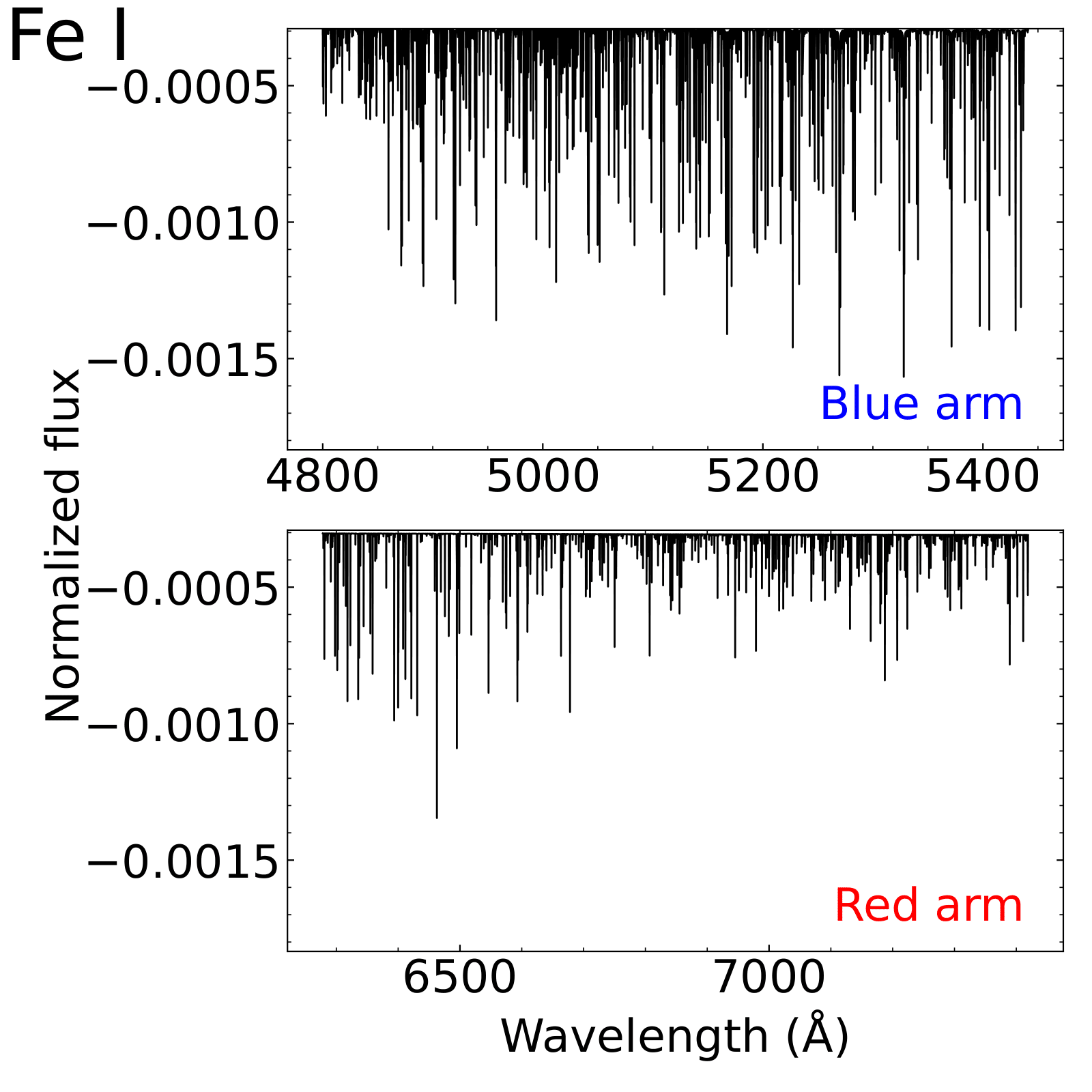
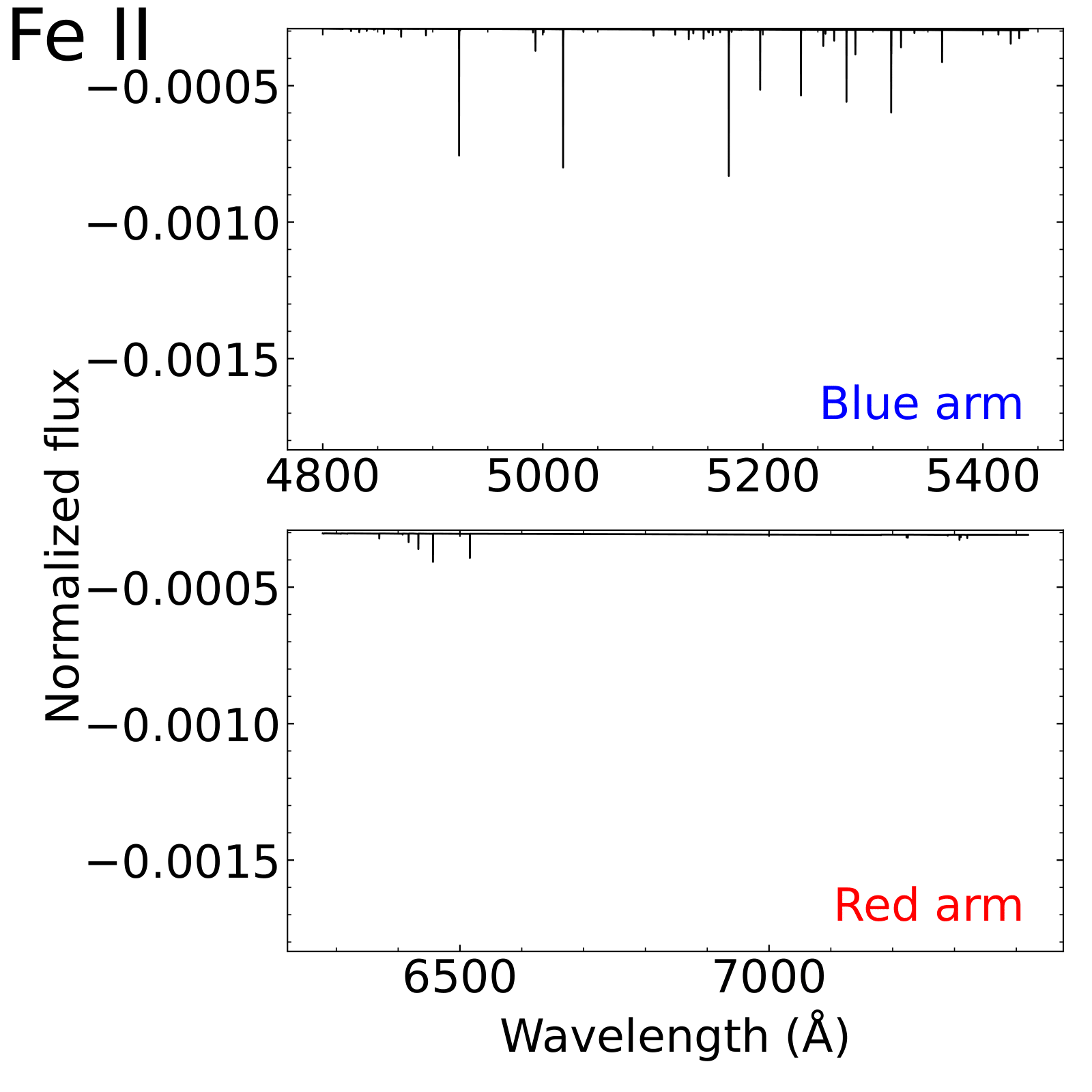
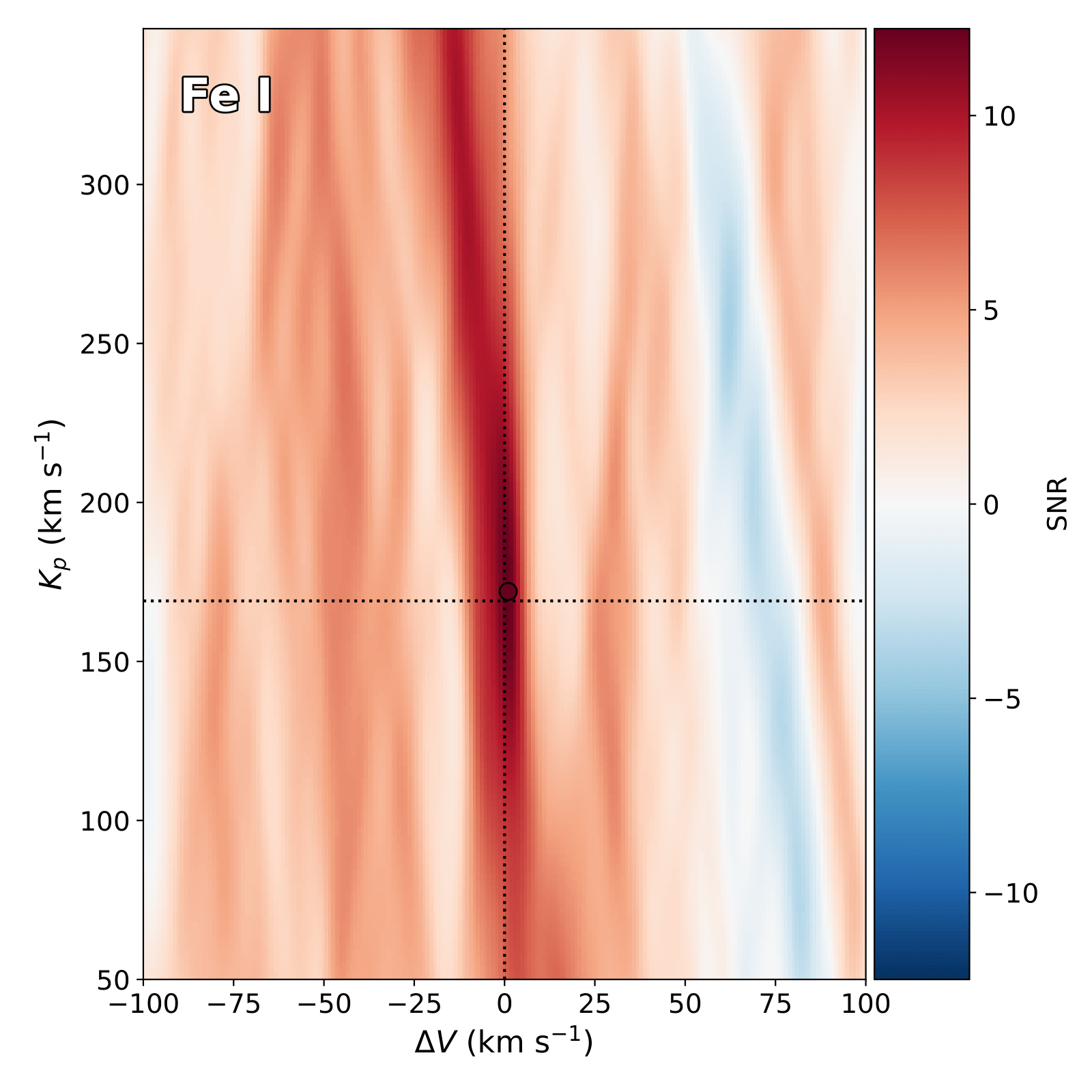
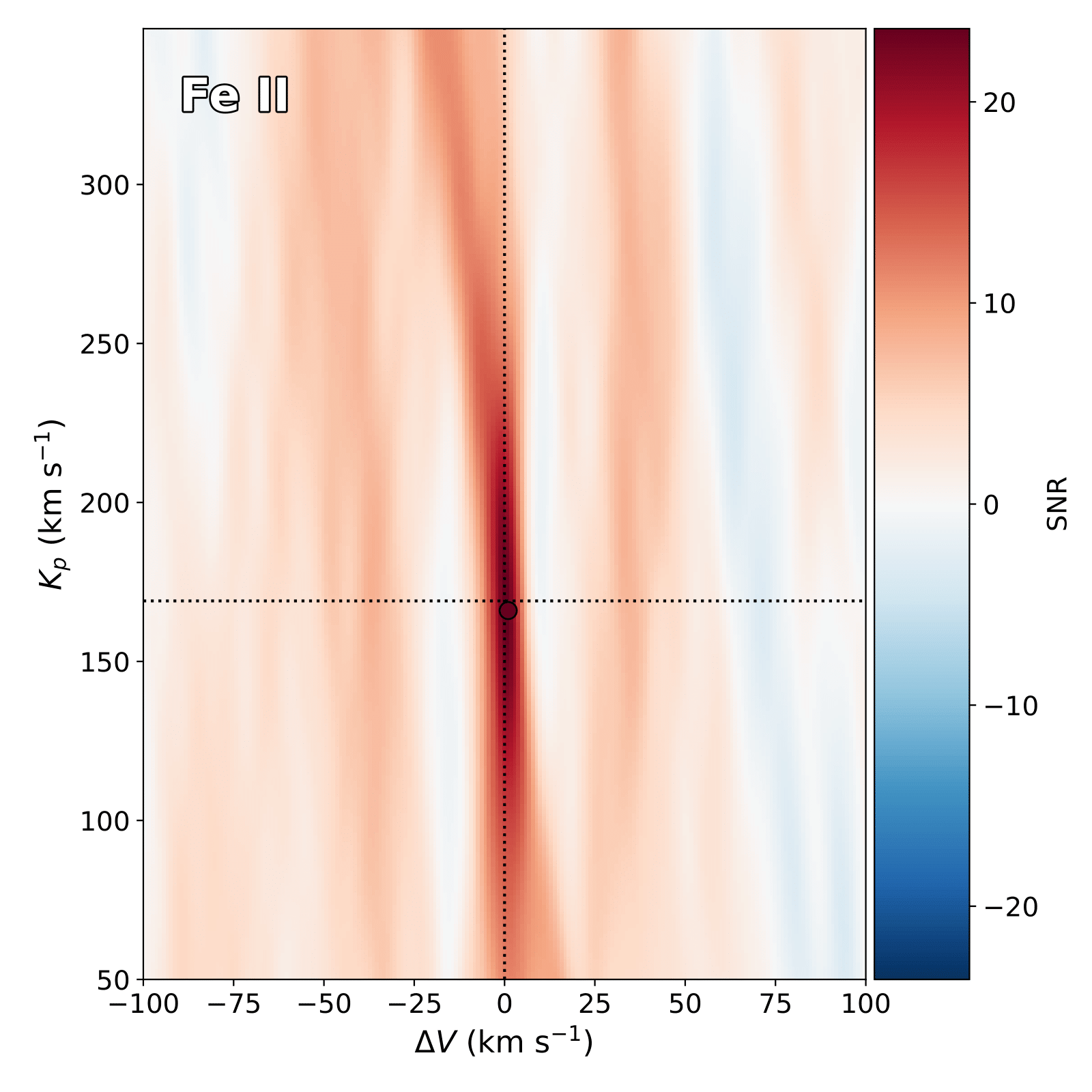
KELT-20b is a well-studied ($T_{\text{eq}}=2262$ K) ultra hot Jupiter, but its multidimensional atmospheric structure remains unconstrained. We performed high-resolution cross-correlation transmission spectroscopy (HRCCTS) on a single transit time series of KELT-20b, observed with PEPSI on the LBT. Upon combining nineteen in-transit exposures, we detect Fe I $(11.9\sigma)$ and Fe II $(23.7\sigma)$ and tentatively detect Na I $(3.4\sigma)$ and Cr I $(3.3\sigma)$. The full-transit velocity offsets of the strongest absorbers are $\Delta V_{\text{Fe I}} = -1.0 \pm 0.7$ km s$^{-1}$ and $\Delta V_{\text{Fe II}}= 0.0\pm 0.5$ km s$^{-1}$, which are mostly inconsistent with previously published values for KELT-20b, although the previous measurements are mostly inconsistent with each other. By correcting for discrepant systemic velocity solutions of up to $1.7$ km s$^{-1}$ between studies, our Fe II offset becomes consistent with previous measurements ($\leq 1.7\sigma$), while Fe I remains significantly less blueshifted than in earlier studies ($\geq 2.2-4.5\sigma$). We propose a set of detection criteria to improve future reproducibility in HRCCTS work. Phase-resolving the Fe I and Fe II absorption signatures into eight orbital phase bins reveals distinct dynamical regimes: Fe II exhibits a strong phase-dependent blueshift from ingress to egress along with significant limb asymmetry, while Fe I shows weaker signals and a more modest blueshift with phase. These patterns indicate day-to-night winds and suggest scale height differences are a significant driver of limb asymmetry in KELT-20b.
-1.png)
Hydrothermal synthesis and testing of metal oxide nanostructures
During my research assistantship at the NSF Center for Industrial Sensors and Measurements with Prof. Sheikh Akbar in the Ohio State Department of Materials Science and Engineering, I focused on manufacturing nanoscale metal-oxide gas sensors (MOGS) aimed at detecting hazardous gases at trace concentrations. My responsibilities included synthesizing nanostructures of various compositions, depositing them on substrates with diodes, and testing their sensitivity using electrical measurements. For reactive sensors, I documented their morphology and composition with scanning electron microscopy and X-ray diffraction, archiving the results in the Open Database of Resistive-type Sensors (ODORS). I also compiled sensor data from current literature into ODORS, with the aim of developing a platform to identify trends in the selectivity and sensitivity of MOGS.